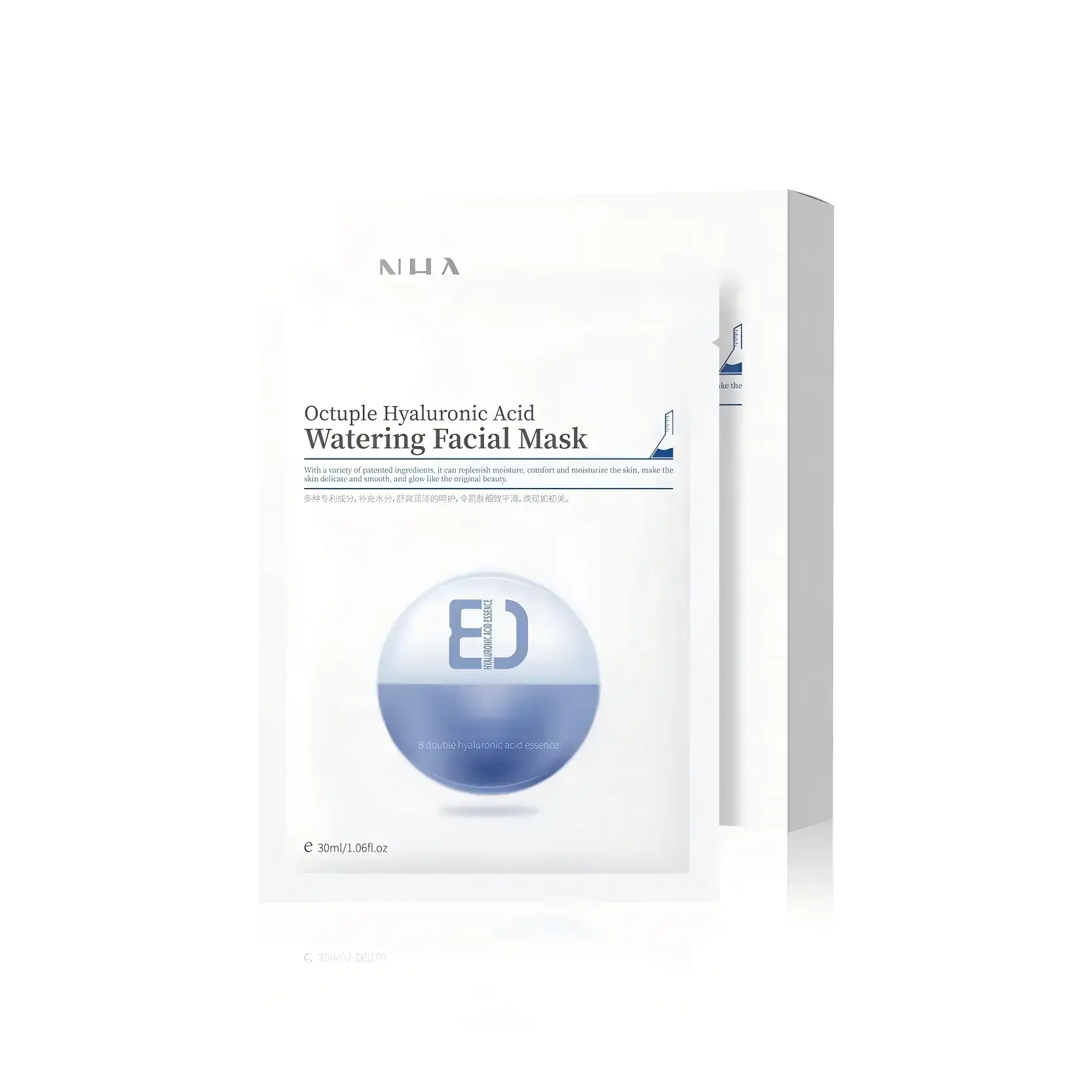
When it comes to sheet masks, most people focus entirely on the ingredients list. We scan the back of the pack for Hyaluronic Acid, Vitamin C, Retinol, or Niacinamide, assuming the liquid is doing 100% of the heavy lifting.
But here is an industry insider secret: The serum is only as good as the material carrying it.
Think of a sheet mask as a delivery vehicle. If you put a rocket-fuel formula into a broken-down car, it’s not going anywhere. In the skincare world, if the fabric dries out too fast, it creates a reverse-osmosis effect—evaporating your expensive serum into the air and pulling moisture out of your skin instead of pushing it in.
Whether you are a skincare enthusiast looking to maximize your Sunday self-care routine, or a beauty brand founder designing your next bestseller, understanding carrier materials is your ultimate competitive advantage. Here is the definitive breakdown of the top sheet mask materials on the market today.
1. Traditional Cotton & Microfiber
💡 The Vibe: The Reliable, Everyday Workhorse
Cotton and woven microfibers are the foundations of the sheet mask industry. They are what taught the world to “mask” in the first place.
- How It Works: These materials rely on a standard capillary action to hold liquid. Microfiber, being engineered to be much thinner than human hair, offers a noticeably softer, more velvety texture than standard cotton and clings to the skin with decent cooperation.
- The B2C Perspective (Skin Benefits): It’s the ultimate comfort blanket for the face. It’s breathable, soft, and rarely causes mechanical irritation, making it perfect for daily, low-stakes hydration or soothing a mild sunburn.
- The B2B Perspective (Brand Strategy): If you are launching a mass-market brand or an entry-level skincare line, this is your go-to. The manufacturing cost (COGS) is low, the Minimum Order Quantities (MOQs) are highly accessible, and the shelf-life stability is incredibly predictable.
Best For: Daily hydration, sensitive skin soothing, and budget-conscious beauty brands aiming for high-volume sales.
2. Hydrogel Masks
💡 The Vibe: The Cooling, High-Aesthetic Luxury Experience
Hydrogel sheet masks look and feel like a premium treatment straight out of a high-end Seoul medical spa.
- How It Works: Unlike woven fabrics, hydrogel masks are made by blending nutrients directly into a gelatinous, hydrophilic polymer matrix. The mask is the serum, solidified.
- The B2C Perspective (Skin Benefits): The moment hydrogel touches your skin, it lowers the skin’s temperature, providing an instant anti-inflammatory, de-puffing effect. Because it responds to body temperature, the gel slowly melts and thins out over 20 minutes, visibly demonstrating that the nutrients are locking into your skin contours like a second skin.
- The B2B Perspective (Brand Strategy): Hydrogel is a marketing dream. It is highly photogenic, making it a favorite for TikTok and Instagram “get ready with me” (GRWM) content. It allows brands to command a much higher retail price point, offering excellent profit margins if positioned as a “flash treatment” before events.
Best For: Anti-aging, intense de-puffing, and beauty brands focused on visual marketing and premium pricing.
3. Bio-Cellulose
💡 The Vibe: The Gold Standard of Biotech Skincare
If cotton is a bicycle and hydrogel is a sports car, bio-cellulose is a spacecraft. This is where skincare meets true biotechnology.
- How It Works: Bio-cellulose is not manufactured in a traditional textile mill; it is grown. Derived from natural coconut water fermented with a specific bacterial culture (Acetobacter xylinum), it creates an ultra-three-dimensional nanostructure.
- The B2C Perspective (Skin Benefits): These fibers are roughly 20 nanometers wide—thousands of times thinner than a human hair. Because they are so microscopic, they act like a physical vacuum, molding perfectly into every microscopic fine line, pore, and wrinkle. Bio-cellulose can hold up to 100 times its dry weight in fluid and boasts zero evaporation during a 30-minute treatment. It pushes active ingredients deeper into the dermis than any other material.
- The B2B Perspective (Brand Strategy): This is the crown jewel for clinical, clean-beauty, or medical-spa brands. It is 100% biodegradable and toxin-free. While the manufacturing cost is higher due to the fermentation time, it allows you to position your product in the prestige or luxury tier, sitting perfectly alongside clinical treatments or post-procedure recovery care.
Best For: High-end anti-aging treatments, intense brightening, post-laser/post-peel recovery, and clean/prestige beauty brands.
📊 At-A-Glance Material Comparison
| Feature | Cotton & Microfiber | Hydrogel | Bio-Cellulose |
| Skin Adhesion | Moderate | High | Flawless (Second-Skin) |
| Evaporation Rate | High (Dries fast) | Low | Near Zero |
| Sustainability | Variable (Cotton is bio, microfiber is plastic) | Low (Polymers) | 100% Biodegradable |
| Price Point (B2C) | $ (Budget-Friendly) | $$ (Mid-to-High) | $$$ (Prestige / Luxury) |
| Brand Margin Potential | Volume-driven | Balanced | High-Premium |
The Bottom Line
In the modern beauty landscape, consumers are smarter than ever, and the market is incredibly crowded. Don’t let a cheap fabric waste a premium formula.
- For the Consumer: Next time you shop, look beyond the marketing buzzwords on the front of the pack. Turn it over, check the material, and invest in a carrier that actually delivers what you paid for.
- For the Brand Owner: Your choice of sheet mask material defines your target audience, your retail price, and your brand’s efficacy reputation. Match your material to your brand identity, because in skincare, the medium truly is the message.
Looking to develop a custom sheet mask line but not sure which material fits your budget? Reach out to our product development team today for a comprehensive formulation consultation.

Leave a Reply